Assignment 4 – Magazine Illustration

After completing my research for this project, I started working in my sketchbook. I started how I always do now, with a mind map and a mood board. I tried to think of things relating to magazine illustration, but I also took each of the prompts from the brief and starting mind mapping those as well. I wanted to see what ideas I could form from them.

IMG_20200807_202128.jpg

Something that really struck a chord with me was the disaster prompt. When I looked up ‘types of disaster’ on google it said that disease and epidemic was a type of disaster. Obviously living in 2020 is all about pandemic, disease and trying to prevent disaster. I was so inspired by this – but I think that only makes sense, every aspect of our lives is currently effected by covid-19 and the need to control the virus so that we do actually prevent disaster.

My illustration was doing to be based on just that – ‘Can We Prevent Disaster?’. It sounds like an article about preventing disaster by the pandemic getting even worse, or by the country not managing to control the virus and result in disaster for the NHS.

I made notes in my sketch book, all things that came to mind when we talk about corona virus and lockdown. What were visuals that prompted thought on covid-19 and lockdown etc?
Face masks, Gloves, Visors, Key Worker papers, leaflets explaining lockdown, children’s paintings of rainbows.

Next I got together some items to photograph ready for my still life. I used hand soap, face masks, gloves and hand sanitiser. I photographed them in a few different compositions. I sketched the best ones in my book, I tried to think about how they would translate in a magazine illustration. Is it clear enough to understand? Does it make sense in context with the article.

I was most happy with the illustration without the gloves. I didn’t think they gloves were clear enough, where as the other items were all instantly recognisable. I chose this one to use for my still life drawings. I worked in pencil for my still life.

When I look back over the drawing now I can see some areas I am unhappy with, the hand sanitiser bottle was not as accurate as I would have liked. I felt very rusty working on this still life in all honesty – I feel like I did a lot more of these types of drawing on the Drawing Skills module, and I had really got to grips with a still life. It  has been quite a while since I did that now however and I should really start doing more still life drawings in my personal work to keep exercising that muscle!

Image may contain: drawing

I made the tonal study in procreate. I started making each different element of the picture individually – this was a really interesting way of working for me. It was almost like a jigsaw puzzle or a collage – putting the different pieces together. I feel like this was really helpful for me as it did break the habit I have of relying on line. Instead of using opaque/block tones of colour drew them with a watercolour brush. I wanted the image to appear more stylised and modern – especially after the research I did into magazine illustration. I wanted to push myself a little. I do think it paid off because I am really happy with the way this turned out. I feel like the briefs in part 4 did really push me out of my comfort zone and that it forced me to be more experimental. I hope that if I keep working in this way on my OCA journey that I will develop my own style.

img_2607

After the tonal exercise I started working on some more experiments with different brushes. I did keep the same monotone theme as I think it was really effective in the previous drawing. This time I did use ‘ink-ier’ brushes but the pieces do look more digital because of the block colour, I think they appear a lot more flat than my tonal study because it mimics traditional media. I decided for my final piece I wanted to merge the ideas from both, I wanted to use the tonal study and add more details/refinement.

I liked the grey areas of the other studies that gave the illusion of the surface that the objects were sat on. In the final piece I wanted to do this again but more refined. I also wanted to add more texture. I experimented with some brushes in Procreate and found some more watercolour brushes and pastel style brushes I liked and thought fit in well. I also decided to keep the piece monotone – as this was an article about disaster and now covid-19 it was to be assumed that it was a magazine for adults.

I actually decided to continue using the same image that I created for the tonal study and elaborate on it. Otherwise I would have been spending a lot of time trying to replicate the image – I just duplicated the file and worked within that.

I added the surface using different layers of pastel brushes and added shadows to the objects. I feel like this helped create more dimension. I tried to work with a midtone and then add areas of shadow and highlight. I added some detail and further texture. You can see on the actual objects themselves I added further shading and detail to make them seem more 3 dimensional. I also added more area of highlight to make it look like the light was shining on them, in an almost spotlight way.

I kept the background white, I felt the composition was effective for a magazine illustration as there was space for titles and text around the illustration. I also felt that the illustration was minimal enough to be able to be used at a larger or smaller scale.

img_2614

This project was a big step for me, I never usually work in this stylised way, especially with using minimal line. It feels more graphical than my usual work and I think this helps it feel more refined. I do think that there is almost a mid-century aspect to the final piece and I am really happy with that. I do think that the initial drawing could have been more accurate and that perhaps I could have taken more time on the actual graphic design aspect to the drawing again – start adding text to the initial thumbnails etc so I can better see how to place it.

Image may contain: text that says "Can We Prevent Disaster? Lorem ipsum dolor sitamet, consectetur adipiscing sed do eiusmod tempor incididunt labore dolore magna aliqua Quis ipsum suspendisse ultrices gravida. Risus commodo viverra maecenas accumsan lacusvel facilisis."

I wanted to make these mock ups so I could show how the illustration would work in a magazine.

No photo description available.

Image Source for Free to use Magazine Mock Up 

I showed the illustration as both the large and small illustration in this magazine mock up (which I downloaded from the link above). I wanted to show how it would work a long side an article in a magazine.

As I said earlier in part 4, as I progress through the course I can definitely see that I do have a big weakness on the graphic design front and that it is something I definitely need to improve upon. Something that has improved in my work on part 4 however is my use of line. I no longer feel like I am relying on it as much, especially in this piece where I have used small areas of textured line to add detail. I think my use of line has changed, it is much more loose – I do still have a long way to go but I do feel like I have been trying to implement my tutors feedback into my work as much as possible and it is paying off. I look forward to continuing to part 5, but I will definitely be revisiting part 3 will some of the things I have learnt and my tutors comments to improve the section before any formal assessment.


Assignment 4 – Research

Before getting started on Assignment 4 I wanted to do some research into magazine illustration. At first I didn’t know where to start but I found the interesting article below on illustrated magazines/magazines will interesting illustrations.

12 independent magazines with clever, imaginative illustration ...

Stack Magazines article on Illustrated Magazines 

For me it was really interesting to see that a lot of magazines do still use illustration – and so many different types of magazines and topics. I previously did a post talking about Vogue Italia’s illustrated issue – I think I do think of fashion when I think to illustrations in magazines – this means it was really interesting for me to see how editorial illustration works a long side different types of articles and in different types of magazines.


Editorial Illustration | Lucas Jubb Design & Illustration

Editorial Illustration – Lucas Jubb – Image Source

The above illustration by Lucas Jubb is accompanying an article on how to work effectively while managing stress. I really like the illustration – it is very stylised and attention grabbing. The colour palette matches the magazines design. The illusration itself instantly gives the reader and idea about what the article is about and helps you better understand before you start reading. The head with the cogs and then surrounded by all different things that contribute to stress – work/work supplies, mobile phones, clocks meaning time, batteries meaning energy, symbols suggesting relationships. I think it is a very clever illustration – especially as it is quite a hard topic to be confronted with, the illustration still does the job with out being daunting or uninviting.

Leena Kisonen - Editorial illustration

Editorial Illustration – Leena Kisonen – Image Source

I really like the above work by Leena Kisonen – I think it is very bright and eye catching – but it is also very inviting. I love the colour palette, bright colours but cool tones to really communicate the wintery feeling. I really like how it seems seems simple at first but the longer you look the more you notice. I like how stylised a lot of these illustrations are – as the articles don’t need them to be 100% accurate images( as that is what photography is for) it allows the illustrator some creative freedom.

image_kalenterit.jpg

Magazine Illustrations – Sami Viljanto – Image Source

These calendar illustrations for magazines by Sami Viljanto work well as stand along art in my opinion. It reminds me of the poster design research I looked into – works well both alone and with writing.

Magazine Cover Illustration Art

Magazine Illustration – Sam Osborne – Image Source 

I think looking at these magazine illustrations has taught me that the illustrations are really there to enhance a piece of writing. I think before I thought that the illustration was just to ‘decorate’ or go with a piece of writing where as now I think that it is more likely that the illustration is there to help the reader better understand the article, whether that be topic, tone or both.  I like the way that Sam Osborne (above) has incorporated words into the actual illustration. I know I have previously mentioned in my learning log that I feel like lettering is a weakness of mine so I would like to at some point incorporate more lettering into my work where necessary.


Character Development

Concept art of Rapunzel by Glen Keane from Disney's "Tangled" (2010). Description from pinterest.com. I searched for this on bing.com/images

Concept Art of Rapunzel (Disney’s Tangled) – Glen Keane – Image Source

When researching for this project I made a pinterest board and saved many different examples of character design and concept art. I looked at everything from disney movies to video games – there are many examples of facial expressions, clothing and weapons. It really was very vast and I did feel a little intimidated heading into this brief but I just followed the instructions in the brief and everything worked out luckily!

Overwatch Reference Guide - Imgur

Soldier 76 Concept Art (Overwatch) – Blizzard – Image Source 

I found the video game concept really interesting, we are used to seeing these characters fully fledged as though they are real people. Something I found very interesting was looking at the development for the characters from Naughty Dog’s The Last Of Us 2. You really see the characters go through all sorts of different appearances but how they build upon each stage working towards the final design. I printed some of these images out to place in my sketch book along side my mindmap.

Pinterest Board on Character Development and Character Design


IMG_20200807_201951.jpg

After completing my artist research I got started in my sketch book. I made a mind map – the project for this was quite a loose brief in regards to instruction. I would be creating my own characters but I did feel like a mind map was a good opportunity to sit down and jot down some ideas and notes.

On the next pages in my sketch book I jotted down some ideas of types of people I could draw. I was inspired by the suggestions in the brief and thought of a few more. After this i spent some time sketching peoples faces and making notes. I practices eyes, and looking at how face shape and eyes can affect the character. When I did this I particularly noticed the way you could make a face appear feminine or masculine through the shapes/features. I haven’t spent a lot of time drawing men before so this was really very helpful for me.  I wrote in my sketchbook
Men – Blockier Jaw + Features
Women – Rounder/Softer Features.
I have definitley found my self more comfortable exploring ideas in my sketchbook in part four, I feel like since I have been on the Key Steps in illustration I have finally got to grips with exploring thoughts/ideas and techniques with in my sketchbook.

I started working on 3 ideas for characters. I wanted to do one man, one woman and one child as I wanted to push myself. One day I would like to have a very diverse portfolio so I think now is a good place to start!

IMG_20200807_202014.jpg

First up I started working on an illustration of a man. He is a refuse worker – I decided to draw him as he is a key worker. No matter what, during lock down our key workers have been out working non stop. When I started designing him, I looked up images on google for ‘refuse worker’ and ‘bin man’. I wanted to get a good idea of the clothing used on the job, I also wanted to make sure that the high visibility vest he was wearing was accurate too.

img_2595img_2584

As I started sketching his character started to develop, and I was coming up with more ideas about his story. He’s a dad and he works very early mornings so he always takes a coffee out with him. He wears a big jacket because it’s always cold so early in the morning. He loves sports and because he’s so busy he listens to his sports podcasts when he’s driving his lorry. This sort of led to him having some ‘equipment’ that he takes out to work with him. His ear phones, his coffee cup and his keys. I ended up deciding his name was ‘Andy’. I wish I had a creative story as for why but my husband said that the character looked just like someone he knew called Andy and it just stuck!

I did the same with the other characters I drew, initial sketches and ideas and developed them further in procreate. As I was drawing the characters came to life again.

I started drawing my school girl. I explored in my sketchbook whether I wanted her to be older or younger. I settled on younger because I knew I wanted her to have a bit more naivety and attitude. I wanted her to be a be a big football fan and player – I will be honest in saying that I took inspiration from my younger self on that!

img_2580img_2581

I also did with the bee emblem on her shirt, that was my school badge as a child. She has an attitude – the boys won’t tell her she can’t play football with them again! This also led to inspiration for some of the items that would go a long side her character – a football, a sports bottle and her school book bag. I called her amber after her red hair.

IMG_20200807_202051.jpg

The next character I decided to work on is an ‘influencer’/fashion blogger. Quite literally the opposite of a key worker. I worked the same way again, in my sketchbook before further developing on procreate.

img_2590img_2588

She has attitude and seems to live her life for instagram – what people actually don’t realise is she actually has a marketing degree! I based her clothing on popular social media trends – including sheer fabric, hair dye and lip fillers. Her items were her ‘#gifted’ jewellery, her mobile phone with social media and a designer bag. I called her ‘Sara’ – a lot of people online give themselves names that sound more interesting than their own, it made it as though her name was actually Sarah but she wanted to be more interesting.

IMG_20200807_202059.jpg

After I made the characters and their profiles, I made some sheets showing them with different facial expressions. This was a challenge but I really enjoyed it, the small differences really made a big difference to the overall feel of an image.

Please view the finished character sheets below;

ANDY;
img_2586img_2592img_2598

AMBER;
img_2582img_2593img_2596

SARA;

img_2591img_2594img_2597

I enjoyed working on this project. I feel like now I understand how to make a character and understand how the development of a character is a process. Because of this I think that if I were to do anything like this again I could potentially push it further, maybe with something a little more fantasy based or maybe even video game inspired. I enjoyed drawing the child the most – I think it was most fun as you can be really expressive with it and it still fits with how a child would act. I would like to draw more characters like this, I think they could be fitting for a children’s book or something a long those lines.

Visual Distortion

I started this project with some research into visual distortion in illustration . What I found was that through distortion you can change the atmosphere of an illustration. Through the next few examples I really found how you can play on warping a familiar image and how that changes perspective.

Ralph Steadman Art Collection – Peruse the work and world of Gonzo ...

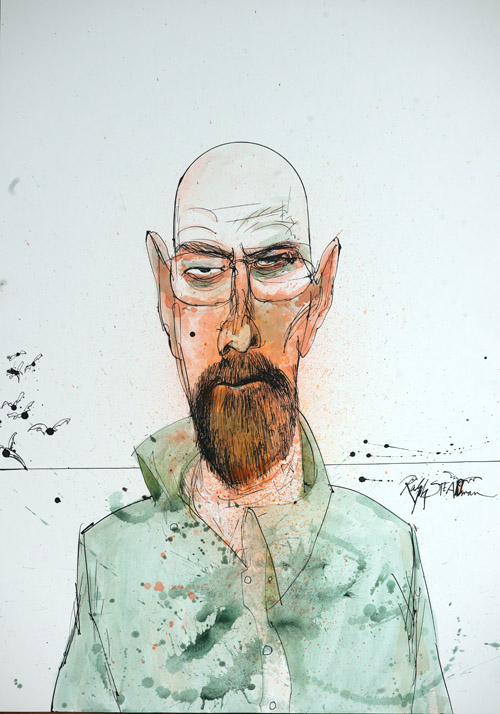
Heisenberg/Breaking Bad – Ralph Steadman – Image Source

Ralph Steadman creates surreal images by playing with distortion. A lot of his subject matters are recognisable but the change in scale is what gives them that surreal feeling. The bodies are elongated and the heads are over sized. The proportions and the loose lines give his work quite a creepy feeling.

Batman; The Dark Knight Returns – Frank Miller

I looked into some comic books as part of my research – I know that it is a common tactic in comic books to distort faces to create an element of horror and to make the viewer uncomfortable. My husband is a comic book collector so I asked for some recommendations – I also asked if he had something by Frank Miller after my tutors recommendation!  I have selected some batman comics to look at as the Joker is often depicted in a distorted way – again I believe this is to create a sense of terror and make the viewer uncomfortable.

Batman Secrets – Sam Kieth

You can see in both of these examples the two different ways this has been done. Both have similarities but both have differences too. Both of them have a large creepy mouth – creating that surreal quality. The Sam Kieth one goes further however and the faces are completely warped – elongated and the scale changes between each panel. I think it is brilliantly done, it totally communicates that feeling of terror – and just how scary the character is.


For this exercise I decided to draw a cat. I have never really drawn cats before and I thought a cat would be a particularly interesting subject matter for ‘visual distortion’. I also wanted to see if I would be able to portray the soft/flexible way a cat’s body is/moves through drawing and collage, I thought it would be interesting to see if I could achieve it and how it would alter through the various states of the drawing.

IMG_20200807_201627.jpg

I found a reference image online and made some initial sketches in my book. I wanted to practice drawing the cat before starting on the larger drawing. Again, I wanted to see if I could achieve that feline form via my work. Once I was happy I started on my pencil drawing of the cat – I worked on A4. I am happy with the drawing and I do feel like I managed to portray the feline form however now I am looking back over the drawing I do feel that as I spent so much time trying to get the body right that the face is not as good.

img_2546

This is the 5 line drawing I made of the cat. When I originally read the brief I wasn’t sure how I was going to achieve this but I am actually very happy with the result. I think it clearly communicates an image of a cat and also retains that feeling of movement.

IMG_20200807_201851.jpg

Before I started working on the collage I started collecting cuttings from fashion and photography magazines. I chose everything that looked interesting, textured or abstract. I also made an outline sketch of the shape of the cat so I could see what space I was working in.

I didn’t plan where and how I placed each piece of the collage – I just chose what I thought was interesting. I’m glad I did this at it definitely made it more thought provoking in the next stage when I started on the final piece of this section.  I ended up with a very colourful, patterned cat with two very big blue eyes. After making the collage I decided to come back to it the next day with fresh eyes. I wanted to see what thoughts it prompted on its own.

IMG_20200807_201908.jpg

When I came back to it, I started working on my sketch, drawing the cat again with big blue eyes and lots of patterns. I started thinking about patchwork and fabrics – that got me thinking about colour blocking and pattern blocking.


img_2561img_2562

A long with the big blue eyes I started thinking about how this could have been the cat of an artist or a fashion designer. Each section could be fabric stitched together, or even painted canvas.

I decided to go with the fashion cat. With the eyes it just seemed to make sense. I imagined that she was the cat of someone who was a fashion designer. The owner would design her clothes to match her super colourful cat. After I had finished the drawing of the cat I started working on the rest of the drawing, I started sketching out the dressing room of the cat’s owner. She loves bright colours and prints so I added art prints that matched the patterns on the cat. The dress and shoes that are in the room also match the cat.


The end result is actually quite surreal I think as I don’t know if it actually makes sense. That being said I feel like the story sort of wrote its self – once I had drawn the patterned cat the narrative just seemed to flow a long with it.

img_2572

I found the exercise really interesting because of this. It is something I would like to experiment with more in future. If I was to do something like this again I would maybe experiment more with texture and shape. That being said I am happy with the overall outcome – this is something I would never have drawn or even thought of. I did also enjoy working with this colour palette – again I never usually use colours like this but I feel like it was predetermined by the collage. Now I have built my confidence I would like to revisit this type of exercise – I would like to push the distortion aspect further, maybe play with faces to create something a little more surreal and maybe uncomfortable – like the examples I found in my research.


A Tattoo

I started this project with some research in to tattoos and looking at different types of tattoos.

Follow the Flash in Scotland | Gigs & Events hosted by Sailor Jerry
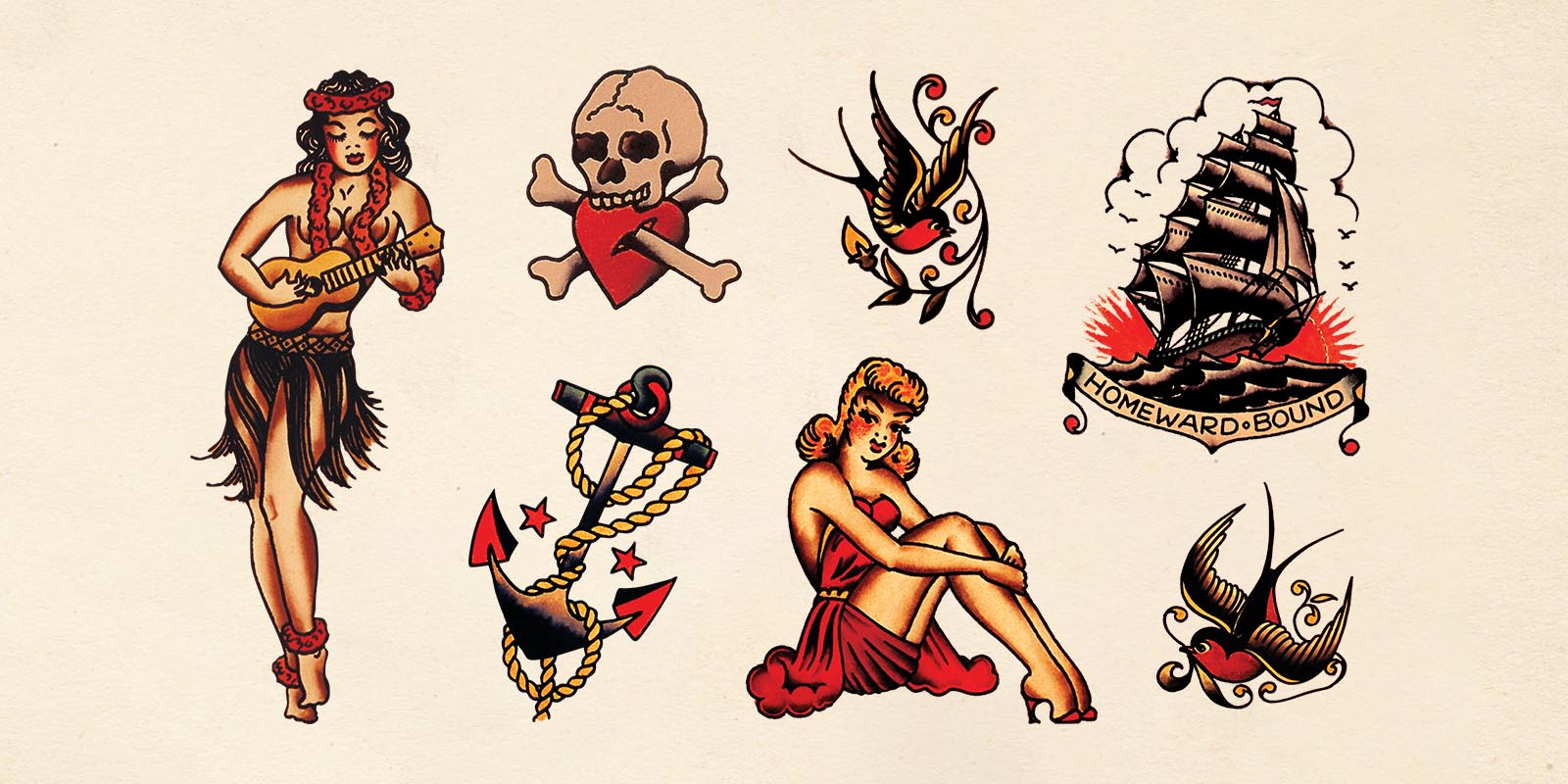
Sailor Jerry Tattoo Flash – Image Source

Above is tattoo flash by Sailor Jerry. Sailor Jerry is the name of the famous american traditional artist Norman Keith Collins. He was an american tattooist and sailor who tattooed in Hawaii before passing away in 1973. He is the most famous traditional tattoo artist and his designs are just as popular today as they were back then.

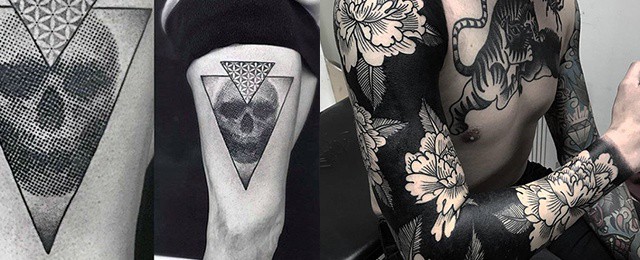
Top 50 Best Different Tattoo Styles Of All Time - Most Popular ...Article on Different Types of Tattoo + Image Source

Above is a link to an article about all different types of tattooing, including the most popular/common ones. The above image is examples of black work and dot work. Black work is where large areas are ‘blacked out’, this often creates an aspect of negative space where the natural skin colour then stands out against it. Dot work is when an image is make up of many dots, it is similar to some aspects of traditional tattooing as it is an image made up of dots. It is however typically made with a modern tattoo machine.

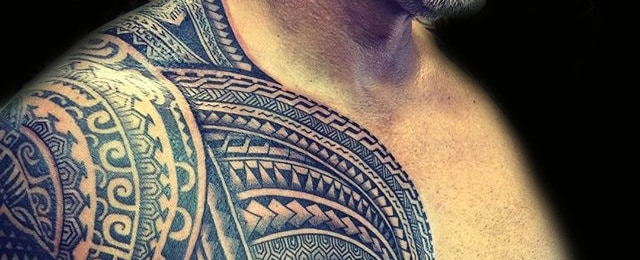
90 Samoan Tattoo Designs For Men - Tribal Ink IdeasSamoan Tattoo – Image Source

The Spirituality Behind Samoan Tattoos Video

Samoan tattoo is an example of tattooing that has a cultural and spiritual meaning. It is a tradition that has been passed down through generations. The method of tattooing is still made in the traditional way using a tool called an ‘au’ – it is made with a long wooden handle and using sharp needles on the end which is then tapped into the skin with another small tool – you can see it being used in the above video.

44 Unique Samurai Tattoo | Japanese tattoo, Samurai tattoo ...

Traditional Japanese Tattoo – Image Source

This is a photograph of a traditional Japanese body suit. Japanese tattooing often features symbols from Japanese folklore. The tattoos are often very large and very elaborate. These body suits are often tattooed on members of the Yakuza – the Japanese Mafia. This is one of the reasons in which tattoos still have quite a bad reputation in Japan – you can not access certain places (such as bathhouses etc) if you have tattoos as it is seen as gang affiliation.

Vintage Photos of Tattooed Women Give a Historical Look at Tattoos

Vintage photograph of woman with tattoos – Image Source 

Tattoos do still have a bad reputation in many places, even here in the UK if many employers know you have tattoos you will not be hired. I have a lot of tattoos but you would never know – I have purposely had them so that you can not tell – nothing on my hands, chest or feet. People do still say that women shouldn’t have tattoo’s and that they are masculine – that is why I love photographs like the one above, women have been getting tattoos for generations now! You just never noticed!

I have some books about tattoos that I looked through whilst I was doing the research – they also show many different types of tattooing and tattoo design. Tattooing is a really vast artform – there really is something for everyone. You can also see examples of new school, realism and pin up in these images.

Here is an example of some of my tattoos – one of my arms and one of my leg tattoos. Most of my tattoos are black and grey realism, they are often influenced by illustration and art – here you can see a Junji Ito illustration and an Enoch Bolles pin up.


I was excited to get stuck in to this project after doing all the research. I have a lot of tattoos, and I have both friends and family who work within the tattoo industry. It is something I have been surrounded by for a long time.

After doing the above research I got started in my sketchbook with a mood board and a mind map. I made the mood board using some tattoo magazines I had picked up from some tattoo conventions I had been to in the past.

IMG_20200807_201824.jpg

When I spoke to my friend and family member who are tattoo artists I mentioned this project, I did ask what they thought I should consider. They both said the same thing and said that I should consider placement when designing a tattoo. It is very important to take the part of the body into consideration when designing a tattoo because it is not flat like paper – the tattoo will wrap around the arm/leg etc and that has to be taken into consideration. Size is also important. Will that size of tattoo look out of place on that part of the body or not? How will it look? They both also use ipads/procreate to make their designs now as it is a lot more efficient when working with a client. I made my initial sketches on paper and then moved over to procreate when working on final designs.

After my mood board and mind map I started making some sketches based on my research. I knew I wanted to do something in a more traditional style. I decided on traditional in style as I was inspired by the classic ‘MOM’ heart tattoo design. I did also make some sketches featuring dotwork and Japanese flowers as these are both forms of tattooing that are ‘traditional’, just not in the same style. I liked the idea of a gypsy head tattoo (something I previously took inspiration from in assignment 1). The gypsy head tattoos are also traditional, they usually feature a woman’s head in a profile view. They are typically very pretty faces with lots of adornments usually headscarves, lace, frills and flowers. I wanted the woman in the design to be the mother, I did explore a few different ideas with this one. I wanted it to be more clear that she was a mother so I decided to add a baby into the drawing.

Kewpie tattoo ideas | Kewpie tattoo, Doll tattoo, Spooky tattoos

Vintage Kewpie Illustrations/Tattoo Flash – Image Source

When I added the baby to the sketches at first it was quite a simple design but I felt that it didn’t fit well enough with the actual mother. The design felt disconnected, the baby didn’t feel like it fit in because the mother looked traditional and quite decorated. I started doing some research and started looking into kewpie tattoos. Kewpie tattoos are quite popular, especially within traditional tattooing. People often have them these days when a baby is born. They are based on vintage dolls and illustrations. I did take some inspiration from the kewpies with the baby in my design – especially in the hair and eyes. I didn’t make it exactly the same as a kewpie as I didn’t want the focus to be on the baby. I just wanted it to fit into the piece better. I gave the woman eyes that made it look like she was looking down at the child.

img_2544img_2528

Another idea that I pursued from my initial sketches was a traditional rose with a scroll. The scroll would have said mother – I thought about using a word that related to motherhood and the relationship with their child. I thought of words like ‘Devotion’, ‘Dedication’ and ‘Unconditional’. I think these words would have worked well with in a tattoo because often in tattoo design the meanings are little more vague. That being said I didn’t think it would work well on a mothers day card so I decided to go with ‘Mother’. I thought it was almost like a classier take on the ‘MOM’ heart, but still remained traditional in style and strong enough for a man to have on his body and it not seem too feminine.

Vintage Gypsy Tattoo Vintage

Traditional Style Gypsy Head Tattoos – Sarah Purr – Image Source

I kept size and placement in mind when I made my drawings, I did work as though I was designing a tattoo for the top of the arm. I made some mock ups on photoshop and I did actually print out my images and hold them against my husbands arm as though they were a stencil being applied. This helped me get a real feel for how each image would sit on the arm. I decided to proceed with the gypsy head tattoo. It felt more elaborate and I felt it was more of a homage to a mother than the rose. I kept in mind that it was a tattoo for a man so I did try and keep the colour palette not only true to traditional tattooing but also that it would suit a man.

I added a scroll and a border to the final design so that it would feel like a completed piece. I took the idea of the scroll from the rose design so that it would also say ‘Mother’ – again a nod to the classic MOM tattoo.I also added a rope border. I found a lot of these when I was doing my research. They come from traditional tattooing, originally from the sailor tattoos and the more nautical theme – they seem to have made their way into traditional type tattoos in all themes as the years have gone by.

For text I practised drawing some of my own letting in my sketchbook from some traditional tattoo lettering I found whilst I was researching. It was very hard to replicate this digitally but I do think it was effective and gives the text a very traditional tattoo feel.

I am happy with the overall out come of this piece. I did push my self and it was new to me creating an image that had more meaning than just what it was initially supposed to illustrate. If I were to work on the piece again it would be nice to try and work in a traditional medium – perhaps ink on some tea stained paper to really give that authentic feeling – that being said, working digitally gave me the flexibility to be able to design for both an actual tattoo and a greetings card.


A Menu Card

graphic

Menu Illustration by Andreas Neophytou

More on my pinterest board for this project on the link below

Menu Illustration + Design Pinterest Board 

When researching for this exercise I looked at different menu designs and also at examples of different restaurants. A lot of these restaurants lean into the ‘sea’ theme but still retain a modern and upscale image. I think a lot of this is achieved through a very clean and minimal look, but also a very light and bright colour palette – often featuring white, blues and greens. Gone are the 1970’s prawn cocktails and instead are oysters and champagne. A lot of the menus/illustration/designs are clean and minimal but still retain an element of a rustic/informal nature.


IMG_20200807_201731.jpg

When I was researching I also made a start with my mood board and mind map exploring what I thought of when I thought of a contemporary seafood restaurant and what a modern seafood restaurant does actually look like.

IMG_20200807_201750.jpg

I started my illustrated mind map, looking at different types of seafood and the garnishes. I really enjoyed making these illustrations, I’m not sure why but both times I have looked at food illustration now I have really enjoyed it. I think food can be special to people and it really is at the heart of so many things, including family, getting together with friends, weddings, parties, etc. I think maybe I enjoyed this research and sketching so much because the restaurants are all closed and the idea of being out to eat seems like so much more of a treat now than it did before! I suppose these modern chain restaurants play into that – it should feel like a treat regardless.

IMG_20200807_201805.jpg

After sketching I took the elements I was happy with and started working on my thumbnails for the logo. I was very conscious of the fact that this will be used on both a large and small scale so I knew that I wanted to keep it quite simple.

img_2545

After deciding on an image I was happy with I drew up the final line art in procreate and put that in my sketchbook along side the thumbnails. When comparing that to the sketches I decided to add the same ‘garnish’ to the top of the image also, I think it helped create a sort of border to the image of the prawn.

IMG_20200807_201811.jpg

I decided to work in watercolour and pen for this drawing. I decided on this choice of media as I thought it would reflect that ‘fresh’ and ‘contemporary’ feeling that the restaurant was looking for. I do think that watercolour is quite trendy at the moment as well, you often see a lot of logos and food illustrations these days that are a little bit more expressive – which I think is also the case with the actual dining experiences. It is not as ‘strict’ as it once seemed, especially with something like a modern chain.

I worked mostly wet on wet and kept the background white as I thought this would help transfer it over to the ipad/computer more easily when I began to work on the finished files for the menu and logo. When I was painting I did add some blue watercolour splashes as a detail, I think it looked nice and played on the spontaneity/flow I was trying to achieve by using watercolour. When I took it through to the final file however I did decided to remove this. Although it would have worked well for the actual menu illustration I didn’t think it was going to work well with the logo. Especially as the logo was going to be potentially used on both a large and small scale – I just thought it wasn’t going to translate well.

Logo;

Small Size;

No photo description available.

Large Size;Image may contain: text that says "S & F"

Menu;

Image may contain: text that says "Sea Food"

Free Menu Mock Up Source and Download link here

I kept the images mainly the same for both but I did add a green border to the menu to match the restaurant theme and the ‘mock up’ but the illustration and logo are very much the same. I think if I were to do this project again I would perhaps experiment with a more ‘graphic’ look – a vector style image or something. I think that would be something that would be effective with being made at all different sizes. I do however like the look of the watercolour, and I am happy with the overall drawing. I feel like I am reaching a balance in my work between traditional media and digital. I have also adjusted how I use line more in this part after receiving my tutors feedback and looking at the recommended artists. I hold the pen higher up and a lot lighter in my hand and allow the pen to touch where it does – rather than pressing down and having one solid line all the way round.

A Children’s Book Cover

I was equally excited and anxious to get started on this exercise. I have really been enjoying the research I have done into children’s books and children’s book illustrators – I felt really inspired. I was definitely anxious as I have never really drawn animals before this! I know how important it is to push myself and I often find myself learning so much.

After researching children’s books and illustrators, I got started in some research about the actual topic of the book. ‘Animals from Around the World’. I started by making a mind map. As well as the mind map I made a collage with lots of images of all different animals from around the world. I wrote the name of each animal and any words that I thought of in response to each animal. I just wrote down the first thing that came into my mind – I wanted the animals I drew to have character – but I didn’t want to over complicate it – this is for children after all.

IMG_20200807_201718.jpg

Next in my sketch book I made some very rough sketches of animals based on these images/images I had found online. They are very rough as I drew quickly but doing this stopped me being too ‘precious’ about my work and stopped me being to scared to start.

Next I started coming up with some thumbnails of potential book covers. I allowed the characters to become more child like and ‘cartoon-y’. I actually had a lot of fun with this. I took the thumbnails I liked and I put them into procreate to develop them further. I did initially like the one with the animals on top of the globe but I later saw a very similar image online as I was looking for reference images for my characters – I wanted to make something original so I scrapped that idea.

IMG_20200807_201723.jpg

I took the remaining thumbnails and developed them further, eventually turning them into the client visuals. The drawings are quite loose and sketchy in style – that is not just because they are a client visual, but I also thought it would be a nice idea for a children’s book illustration. When I think about the targeted age range (7-11) I thought it would be a good idea to create something that not only look appealing to children but also was relatable. I wanted them to feel invited into the book – I think anything too serious/realistic could be intimidating or seem ‘boring’ to them.


The difference between getting them to read the book or not at that age could be a funny illustration of a cheeky monkey. Children are more receptive to learning when they are having fun. I also wanted them to feel like they could draw the same pictures of the animals, I thought that could also make it relatable to them. I took the lion and elephant out of one of the larger sketches, I really like the way they are interacting and wanted to focus on them.

I tried to choose fonts that seemed fun, and relevant to the topic. Make them seem kind of ‘wild’ and less formal. I think I still have a long way to go when it comes to lettering and the graphic design aspects of illustration.

Image may contain: text that says "Animals from Around the World © e Author Name"

Image may contain: text that says "Author Name Animals from Around the world m"

Image may contain: text that says "ANIMALS FROM AROUND THE WORLD 米 Author Name"

Although I am happy with the illustrations for the client visuals I do feel like you can see my weakness on the graphic design side of things in these illustrations. As I move through the rest of the illustrations on the course I am going to pay closer attention to the design aspects. I have noticed within this exercise that even in my thumbnail sketches I pay less attention to details such as fonts and the placement of titles and names etc.  I’m hoping that as I progress through my OCA journey I can perhaps pick up some modules on graphic design because it is quite clearly a weakness of mine. If not I will sign up for a graphic design course outside of the university as I really need to build my skill set. I think it is something that is vital for me as I progress.


Children’s Books – Research

IMG_20200807_151454.jpg

When looking into this project I decided to use some of the childrens books that we have in the house. There is something that is just so different about holding a physical book in your hands rather than just looking up an illustration on a screen.

I have been reading through Children’s Picturebooks ; The Art Of Visual Story Telling by Morag Styles. I have been really enjoying learning more about the history of illustration and more about the history of childrens picturebooks and those who write/wrote them. I find it very inspiring, seeing all these different books and different styles. I have been reading as much as I can about illustration recently, it has been a very helpful way of researching and studying whilst in lockdown with my little one.

Simon Sock – Sue Hendra and Paul Linnet – Illustrated by Nick East

I looked at these two books ‘Simon Sock’ and ‘Best Friends’ as examples of modern picture books and what appeals to children today. Looking at the covers in particular, they are both very bright and eyecatching. They are also very stylised and the illustrations feature a lot of texture.

Best Friends – Mara Bergman and Nicola Slater

I think that Best Friends looks very influenced by mid century illustration and I really love that. In the illustrations in both of these books the characters have really large expressive eyes and features – I think this helps the children reading understand the characters emotions better. The text in both of the books is just as expressive – moving around the page and the voice lines are often next to the character speaking them – they aren’t tied to the bottom of the page, I think this is more fun for children to read as it feels like the words are actually a part of the pictures.

The Tiger Who Came To Tea – Judith Kerr

I already researched childrens book illustrators earlier in part 4 but I just had to mention Judith Kerr and Quentin Blake again – both of their work is just so good! I absolutely love the way it is so fun and feels like there is so much to see. Every single time I re read ‘The Tiger Who Came to Tea’ I am instantly transported back to being a child – there is just something so exciting to me still in the part where they all go out for tea after the Tiger has eaten all the food and drank all the drinks. I think a lot of these books are very clever because they appeal to both children and parents for more reasons than just nostalgia.

Quentin Blake’s ABC

I think the main thing that I take from this research is that the main theme in these books is for the children reading to have fun. There is so much going on but it is still clear enough to understand and to learn from. I really do have so much to learn but I feel really inspired, especially after reading Childrens Picturebooks. I think it is so nice to learn more about the people behind the books and how they got to where they are now. I would love to have more fun with in my own work – really create more of a sense of energy and freedom, and something that children would like to see.

Museum Posters

To get started on this project I did some research into poster design for both museums and exhibitions.

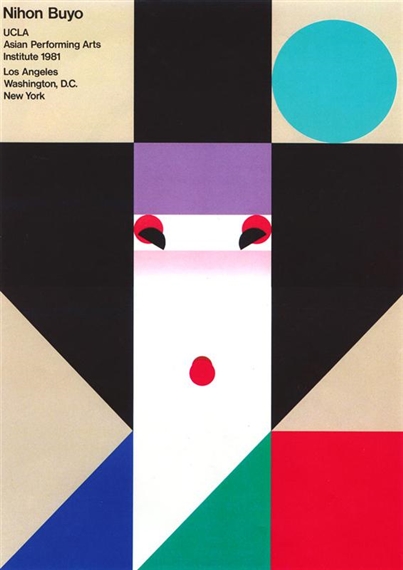
Tanaka Ikko | Nihon Buyo for UCLA (1981) | MutualArt

Nihon Buyo UCLA Poster – Ikko Tanaka – Image Source

What I see when I look through all these designs is that no matter what they are for or who they are for they are all very attention grabbing and all very clear to understand. They are often quite graphical in style, and use large areas of block colour to draw the eye. The text is usually very clear to read and understand – to easily communicate/advertise the exhibiton/gallery/museum. The above image by Ikko Tanaka is very eye catching – large blocks of colour – you initially see and image of a face but when you look close it is all made from shapes. I found this interesting article on Japanese Poster design . A lot of these posters have very clean but very clever design, I would like to look further in to Japanese design in the future.

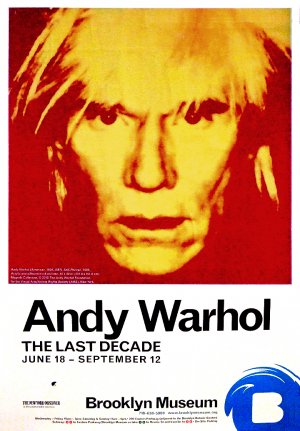
ANDY WARHOL * The Last Decade * Brooklyn Museum Art Exhibit ...Poster for ‘Andy Warhol – The Last Decade’ for the Brooklyn Museum
Image Source

This poster for an Andy Warhol exhibition is very clever, it has a famous photograph of the artist a long side his name in large clear letters – it is instantly recognizabe. You could see this poster from across a room or even a train station and instantly know who it was and what it was for. Again – the bold colours are not only typical of Warhol – but they instantly draw the eye.

Richard Hogg — Design Museum Family Day | Museum poster, Family ...

Design Museum Poster – Richard Hogg – Image Source

This poster by Richard Hogg is very clever as well – It is for a family day at the Design Museum. It is definitely family friendly and features lots of fun characters to really draw younger viewers in. Older viewers can appreciate the design, and everyone is drawn in by those bright colours.

Here is a link to a Pinterest Board with further research/examples of Museum Poster illustration/design – I enjoyed looking into poster design and I think that poster design is an art form in its own right.


Unfortunately going into this project I was unable to go and visit a museum in ‘real life’ as everything is still closed at the moment due to Covid-19. What a very strange time we are in. I instead did the very best I could do from my house and I went online, looking up different museums, different types of museums and viewing virtual exhibitions that were being offered online via museum websites. I also looked up different museums on trip advisor and social media, looking at both what was on display and what visitors had to say. This was so surreal – I felt like I was longing for something from another era when in reality it was just a couple of months ago that we could go and browse in museums and stand next to other visitors whilst viewing collections/exhibitions!

IMG_20200807_201430.jpg

I did some research on museum posters and each audience as a target market. I made some mind maps about what appeals to each group based off my research. After this I decided I was either going to make a poster for children or teenagers – it was going to force me to think in a different way. Adults know what they are signing up for, they see what is on, and they go – as the museum/exhibition already appeals to them. Children and teenagers however usually visit with school or go along with parents – what could I create that would actually grab a younger persons attention and make them actually want to go to the museum.

I was finding it difficult to choose which museum to create a poster for but when I was looking at museums online  – I saw a ticket that was for sale so that you could visit the Natural History Museum and the Science Museum in one day. I was looking at all of things available to both museums when I started sketching different ideas and characters based on the themes from each museum. I did a page of ideas for children, and one for teenagers.

IMG_20200807_201514.jpg

I liked coming up with ideas for both. Making something for children definitely allows more creative freedom but creating for teenagers really pushed me out of my comfort zone. When I was researching museum posters for teenagers I couldn’t find a great deal of things – when I created my mind map I was thinking that humour is often responded to well and is shared online. That made me think about ‘memes’ – viral images that are shared online between friends, often teenagers.


Here is the dictionary definition for Meme – from the Oxford Dictionary via Lexico – https://www.lexico.com/en/definition/meme

meme
/miːm/
noun
  1. 1.
    an element of a culture or system of behaviour passed from one individual to another by imitation or other non-genetic means.
  2. 2.
    an image, video, piece of text, etc., typically humorous in nature, that is copied and spread rapidly by Internet users, often with slight variations.

Lexico Dictionaries | English. 2020. Meme | Definition Of Meme By Oxford Dictionary On Lexico.Com Also Meaning Of Meme. [online] Available at: <https://www.lexico.com/en/definition/meme&gt; [Accessed 4 July 2020].


deal with it - obama deal with it | Meme Generator

image source

How to Make a Meme | Digital Trends

image source

ENJOY YOUR MEAL YOU TOO memegenerator net Penguin bird fauna penguin flightless bird beak advertising

image source

Above are some examples of ‘memes’ – they typically include a bold white font with a black outline – the typically used is impact but as you can see from the above examples that can differ. A lot of memes typically have a block colour background – often resembling a simplified starburst pattern. When I was sketching and coming up with ideas for the teenager poster I couldn’t get the idea of the ‘deal with it’ meme out of my head – it is funny and has just the right amount of teenage attitude. The meme format usually features a pair of pixel sunglasses on someones face and the words ‘deal with it’.


I had drawn a character of a robot for the science museum and explored this for both children and teenagers. He could be cuter and part of a family for the children’s poster – which also appeals to parents. He could be funnier and more sarcastic for the teenagers poster.

I drew some dinosaur characters too – inspired by the natural history museum. I think that the dinosaur is something that is so instantly recognisable as part of the natural history museum so why not play with that and let the dinosaurs become their own characters?

I drew up two mock ups for posters after exploring these ideas – I redrew my ‘deal with it’ dinosaur larger, and I drew up the robot family. When I was drawing these up I decided that the dinosaur poster should have a line about ‘discovering’ something – teenagers are very sure of themselves and especially at the ages of 13-16 they want to do things for themselves. After having their attention drawn by the initial meme/joke – something about discovering for themselves might hold their attention afterwards.

IMG_20200807_201606.jpg

I decided to go with this idea for my finished poster. I know that this probably wasn’t the most efficient way to work for this project but when I couldn’t visit an actual museum it made it a little harder to choose. The text for the meme I decided on was ‘Evolution Happened – Deal With It’. It is attention grabbing and has attitude. I think it is also political enough to really grab a teenagers attention.

I initially made a water colour illustration of the dinosaur but when I put it into the digital file to create the ‘meme’ part of the poster it didn’t look quite right – I ended up redrawing him digitally.


I think this illustration better suits the target audience too, I think the watercolour version did look better suited to children. I drew the sunglasses to look more recognisable as the pixel style glasses from the meme format.

Image may contain: text that says "EVOLUTION HAPPENED 110M0 DEAL WITH IT N HISTORY NATURAL MUSEUM Make your your own Discovery @ the Natural History Museum"

Image Source for Natural History Museum Logo

Overall I am happy with the finished out come of this project – I would love to revisit this when I can actually step foot inside a museum and develop ideas based off my own photographs and sketches I could take when I was there. I would also like to revisit the little robot character I drew in this section – I think he is really cute and funny in the initial sketches I made.


Identifying Tools and Materials

When starting on this exercise and researching different illustrators I ended up watching videos on YouTube both interviewing the illustrators and watching them work. I found it really helpful to not only know how they work but see exactly how they draw and hear them talk about it themselves. I ended up down a rabbit hole of watching mainly children’s book illustrators and watching them work. I found it really helpful – it is not often we get to actually see these illustrations being made!

Quentin Blake

Quentin Blake – image source

Quentin Blake’s figures are drawn in a very energetic and sketchy way. I almost don’t know how to explain Blake’s line work and this is exactly the reason I decided to look at his work in this exercise. They are dynamic and don’t feel like just an outline – they give the energy and sense of movement and excitement to each piece.
The characters tend to have quite big expressive faces – you can instantly understand the emotions of the characters and therefore the atmosphere of the scene – I think that is one of the many reasons his work is so popular with both adults and children.
Elements of the figures are distorted in the fact that they are not accurate – nor are they meant to be. When you focus in on areas of the drawings – particularly the hands of the figures you can see that they are not ‘correct’ – but they are expressive. The shapes and sketchy lines indicate movement and create recognisable shapes. Quentin Blake’s work is not meant to be ‘accurate’. It is supposed to be fun, dynamic and eye catching. I think there is almost an element of naivety in Quentin Blake’s work which is very clever – particularly in children’s book illustrations. It is immediately relatable to children and gives adults a feeling of nostalgia.

Biography | Quentin Blake

Self Portrait – Quentin Blake – Image Source

Blake’s work is usually very colourful which really adds to the ‘fun’ feeling of the image as well as immediately drawing your eye in. The texture in the piece is mainly the watercolour paint – it appears to have been used almost as loosely as the lines. There are areas where it has been allowed to pool when wet and go out of the lines, I think this helps add to the dynamic feeling of his illustrations.

I have a lot to learn from those sketchy dynamic expressive lines and how they indicate motion. In my own work in the process from initial sketch to finish piece I clean up the line work so much to the point that it doesn’t have any of the energy left of the original sketch – the finished piece often seems so cold. I want to be able to replicate the spontaneity of the initial sketch with in the finished piece – Quentin Blake’s work feels so fun and spontaneous – I really should start allowing myself more room for expression within my work.

A KISS FOR THE CAT- Quentin Blake | Quentin blake illustrations ...

A Kiss For The Cat – Quentin Blake – Image Source

I chose to look closer at the illustration from Roald Dahl’s Charlie and the Chocolate Factory. I can remember reading this book as a child and seeing the illustrations. The whole thing was so exciting to me, everything seemed so fun and so plausible. The illustrations are instantly recognisable and now as an adult I miss that sense of naivety, believing that one day an eccentric man in a top hat would give me a chocolate factory! I honestly believe it wouldn’t have been the same with anyone else’s illustrations.

I made some notes whilst looking at the composition of this piece – the figures are both central and joined by holding/shaking hands. Charlie holds the golden ticket above his head which is level with Willy Wonka’s top hat – at first glance this makes them appear around the same size despite one being a child and one being an adult. I think this is very clever as it makes the child look just as important as the adult – as though they are on the same level. The floor is indicated by the colourful chocolate boxes at the bottom of the image behind the figures, again something eye catching and very exciting for children.

Judith Kerr

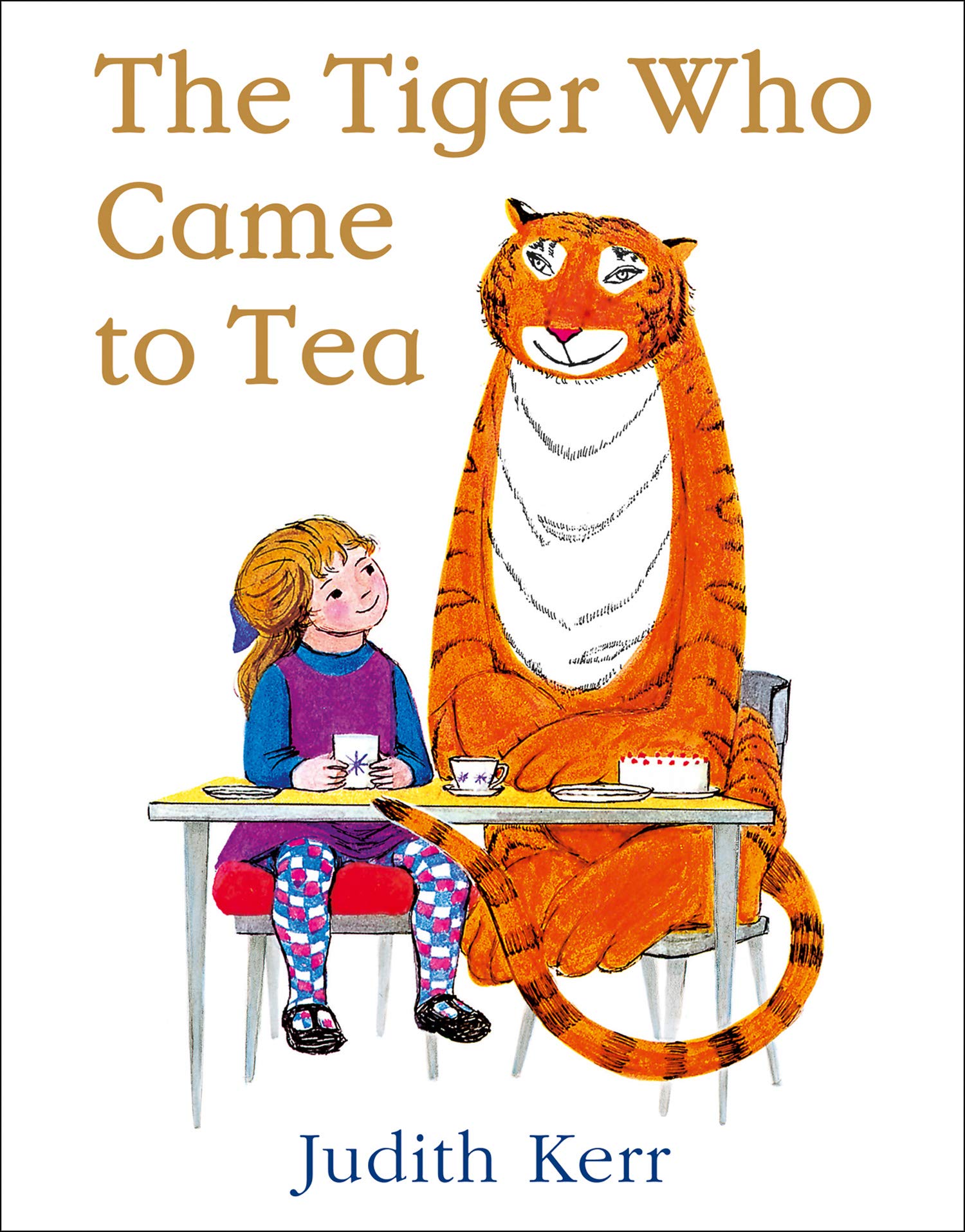
The Tiger Who Came to Tea: Amazon.co.uk: Kerr, Judith, Kerr ...

The Tiger Who Came To Tea – Judith Kerr – image source

Judith Kerr’s work is instantly recognisable to generations of people at this point. Her work is very distinctive. Faces are very expressive particularly on the cats faces (mog and the tiger for example). They have big smiles that really give a sense of mischief. Looking at the cover of The Tiger Who Came To Tea the composition has the girl looking up at the tiger with a look of wonderment on her face – I think that all children who read the book feel the same way about the tiger – he is a brilliant character that kids love. I think for adults looking back on the book now they are more focused on the family and the little girl.
They are both sat at the table with cups of tea and a cake.
The colours are bright and very saturated, this adds to that sense of fun that the book really brings across. I think with a different palette it wouldn’t seem as fun – I think that the bright colours are really attention grabbing and help keep children engaged. I really like the sketchy lines that she uses on the characters – I think that this really does create a sense of energy.

Goodbye Mog: why Judith Kerr killed the nation's favourite cat

Mog – Judith Kerr – Image Source

I think this works really well for the image and the entire book because you feel instantly drawn in right from the front cover. I am a huge fan of Judith Kerr’s. There is just something about both of the illustrators I looked at in detail in this exercise that evoke the same feeling of fun, energy and movement – that really help both grab and keep kids attention. The more I learn about illustration the more I develop such a respect for what people manage to achieve. These illustrators provoke emotional reaction in both children and adults, their illustrations are a part of so many peoples happy memories.

I mainly focused on Quentin Blake’s illustration style for this exercise. I really wanted to try that looser style of drawing, I thought it would be a great way to try and create a sense of spontaneity within my own work. When choosing to go back and redraw the work from a previous exercise I chose the 1950’s project. I think the thing that let me down in that project was that the figures seemed so still and stiff. I thought redrawing them in the same medium/and trying to mimic the style of Quentin Blake was a great way to try and loosen them up a little.

In the video I watched about Quentin Blake he said he did a little bit of prep work as an initial sketch but not too much that the work wouldn’t seem spontaneous. He would then place another piece of paper over the top and then quickly sketch on top. I tried to mimic this, I made some watercolour work and also some with pen. I also tried to mimic the faces of the characters as they are so expressive!

This was a really interesting way to work, it was definitely thought provoking as it forced me to work in ways I never have before. I think my finished drawings are a lot looser and more energetic than the original drawings so I am happy with that however they certainly aren’t as refined as Sir Quentin Blake’s!